find what breaks. build what holds.
Systems fail when the stakes are real. Passaro’s work follows one pattern: find the failure point, understand it completely, and build what should have existed all along.

// trajectory · 2001 → presenthover any node for detail
//projects · selected work
//writing
Things worth writing down.
Essays, field notes, technical teardowns, and interviews on attacker engineering, fraud defense, and operational systems.
Essays · Field notes · Technical teardowns · Interviews
Featured essay

Open Source Was the Mechanism. It Was Never the Mission.
FT3 went open source because shared defense demanded it. That worked: the industry validated the language and built on it. FT3 2.0 now moves to trust groups, where access is measured in reciprocity.
By Vincent Passaro9 min read

Selected writing
4 selected posts
- ESSAYRead essay
Agentic Commerce Changes the Object of Fraud
Fraud defense now requires language for delegated authority, scoped consent, and machine-speed behavior. Explore the three-axis coordinate model.
By Vincent Passaro9 min read
- ESSAYRead essay
FT3 vs MITRE F3: Validation Is Not Operationalization
FT3 built the operating language for fraud defense before the market had one. The next phase is making that language executable.
By Vincent Passaro9 min read
- ESSAYRead essay
Why Fraud Frameworks Must Converge: The 18-Month Landscape
Five fraud frameworks like FT3 and MITRE F3 emerged in 18 months. Here is why the industry must move past fragmentation toward operational interoperability.
By Vincent Passaro12 min read
- FIELD NOTERead field note
Building Adversary-Language Systems
Inside every adversarial system, there is a moment when the harm is real but the language is still behind the event. Traces the work of turning messy, high-stakes domains into shared operating language defenders can use to name, map, automate, prosecute, and disrupt.
By Vincent Passaro9 min read
Media · Selected appearances
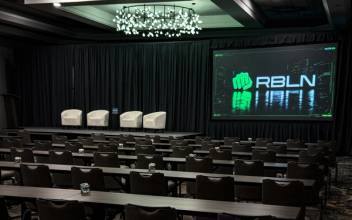
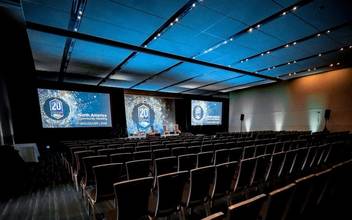
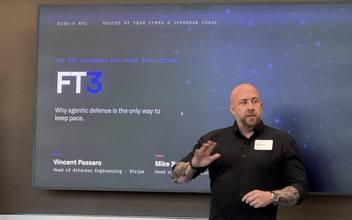
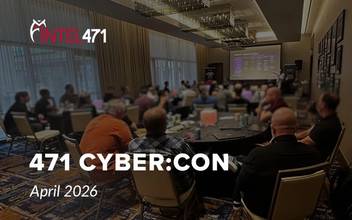
Speaking on fraud, adversaries, and agentic defense.

Training in support of the security community
I’ve delivered these workshops at conferences and to investigators from industry, government and law enforcement.
See the trainingAbout
A career spent at the seam of high-pressure security reality and systems defenders rely on.
In the 82nd Airborne, Vince Passaro learned early that systems fail under pressure, and someone has to understand why. That has always been the work. From Fort Bragg to Booz Allen, General Atomics, Fotis Networks, Buddha Labs, AWS, and Stripe, the pattern has stayed the same: understand how adversaries win, find where defense breaks, and build what should have existed all along.
At AWS, that meant response and cyber intelligence systems built for failure at global scale. At Stripe, it means attacker engineering, FT3, and frameworks that give defenders a shared operating language for fraud and adversary behavior. The logos are not the story. The pattern is: find what is broken, understand it completely, and build what fixes it properly. No theater. No abstractions. Just the work.
CURRENTLY · STRIPE
Start a conversation.
Speaking, advisory, and collaboration.
I usually reply within five business days.
This is Passaro’s personal site. Views expressed are his own. Inquiries here are for personal speaking, training, and collaboration, not Stripe services or access to non-public information.
//off-clock
What keeps the work sustainable: signal, solitude, discipline, and the people worth building for.